
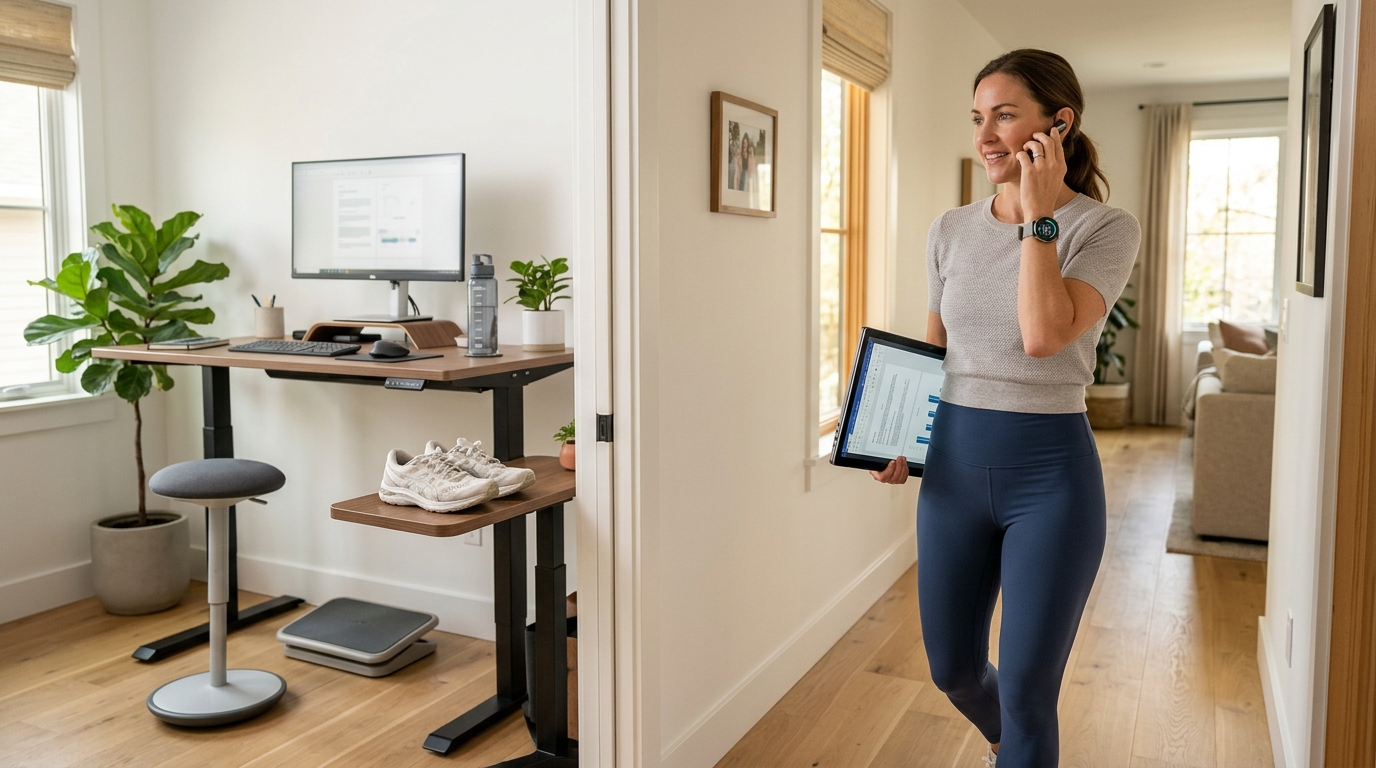
When I switched to remote work, my daily steps collapsed from around 9,000 to under 3,000. The commute, the office coffee runs, the walk to lunch - all gone. If your fitness tracker has been quietly judging you since you started working from home, this one is for you.
Why Steps Matter More Than Workouts for Desk Workers
Here is the uncomfortable truth: a 45-minute gym session does not undo ten hours of sitting. Researchers call it being an active couch potato - you exercise, but you are still sedentary the other 95 percent of the day. Consistent low-intensity movement throughout the day is what keeps energy, focus and metabolism steady. Steps are simply the easiest way to measure it.
The Game Changer: Walking While Working
The single biggest fix in my routine was an under-desk treadmill. I was skeptical - it sounded like a gadget destined for the closet. It was not. A slow 2 to 3 km/h walk during calls, emails and reading tasks adds 6,000 to 8,000 steps to an ordinary workday without carving out a single extra minute.
I use a WalkingPad, the brand that basically created this category. Their pads fold flat, slide under a sofa, and run quietly enough that nobody on your calls will know. If you try one, start slow: walk during low-focus tasks first, and keep deep-focus work seated for the first couple of weeks. Before buying, it is worth checking the current WalkingPad discount code on our site - their promotions come around regularly.
The Rest of the System
The treadmill does the heavy lifting, but these habits close the gap on non-walking days:
- Walk every call that does not need a screen. Even pacing the room counts.
- The post-meal ten. Ten minutes of walking after lunch and dinner - better digestion, better glucose response, 2,000 easy steps.
- Water bottle downstairs. Small friction, extra trips, real steps.
- End-of-day deficit walk. Check your count at 6 pm; whatever is missing becomes the evening walk.
What Changed After 90 Days
Three months in: steady energy through the afternoon slump, noticeably better sleep, and the low-back stiffness from marathon sitting sessions is mostly gone. No dramatic transformation photos - just the quiet, compounding benefits of not sitting still all day.
You do not need more willpower to move more. You need a setup where movement happens by default. Change the environment, and the steps take care of themselves.
Stores in this guide
Sarah Johnson
Senior Shopping Editor
Sarah has 10+ years of experience in retail and consumer trends.
Related Articles

E-Scooter Safety Checklist: 12 Habits of Riders Who Never Get Hurt

The Apartment-Friendly Home Gym: Fit in 4 Square Meters

Recovery Is the Workout: Why Rest Days Decide Your Results
